Sony Vaio Laptop Motherboard Price
For many older laptops, especially those from legacy lines that are no longer current, the cost of a replacement motherboard tends to be relatively modest compared to newer, high-end laptops. Because these machines were built with simpler hardware, less integrated high-performance components, and lower production complexity, their replacement motherboards remain among the more affordable options available when spares are still found. For example, recent listings for some older-model laptop motherboards show prices in the ballpark of ₹5,000 to ₹6,000 for certain mid-generation boards — a figure that reflects their comparatively basic architecture.
That being said, the price could precisely swell astronomically depending on the model and generation of the chipset. More commonly found variants — those that sold widely and had good spare-part circulation — tend to attract lower prices because supply is easier to maintain. In such cases, brand-new replacement boards with compatible chipsets and form-factors may be available for around the same
At times, slightly higher prices are seen when compatibility becomes more niche, the motherboard revision is less common, or when parts must be sourced from older stock. In certain cases, a replacement motherboard for a given model may cost as much as ₹8,000 or even higher depending on the factors like availability, demand, and how the parts are sourced.
The cost is even more influenced by the quality of the motherboard, that is new, refurbished, or a used-tested one. The prices of some used-but-tested motherboards coming from older laptop models look to be lower than the prices of the new ones, although this might come with limitations in terms of warranty, lifespan, or total function.
But with the laptop’s age, the availability of spare parts is one of the main concerns. In the case of older or less popular models, it can be hard to find motherboards that match exactly in which case the price sometimes goes down or one has to choose between used and refurbished boards. This scarcity of parts increases the actual price and also creates doubt about long-term reliability.
Besides the motherboard itself, other costs may be included: installation, disassembly and reassembly labor, testing, replacing of related components (connectors, thermal assemblies, or supporting circuits)— all of them that might be especially costly if the laptop shows wear and tear, damage, or if several components need to be replaced. As a result, the real-world cost of restoring functionality may exceed the listed motherboard price by a significant margin. This is a common scenario across many service-centre estimates in India for laptop repairs.
Because of these variables, many owners of older laptops weigh the cost-benefit carefully: if the motherboard replacement plus labour and any additional parts approach a certain fraction of a new laptop’s price (or the cost of a newer device), they may decide that investing in a new laptop is more sensible than repairing the older one. This is particularly relevant if other parts (battery, screen, storage, connectors) are also old or failing.
Sony Vaio Laptop Motherboard Price for older-generation laptops from that legacy line, replacement motherboards — when available — generally cost between ₹5,000 and around ₹8,000–₹9,000, with prices varying depending on supply, demand, and condition (new vs used). More complex sourcing or rarity can push the price up. Anyone considering a replacement should also factor in labour and any auxiliary costs, and assess whether the repair offers sufficient value compared to buying a newer laptop. If you want — I can pull up 10-year historical price range data for such motherboards in India to show how the costs have changed over time.
What is the current price range for a replacement motherboard for Sony Vaio Laptop Motherboard Price laptops in India (for different series like VivoBook, ROG, ZenBook etc.)?
When we talk about motherboard replacement costs for laptops in India, they are mainly dependent on how sophisticated the motherboard design is and the type of laptop. To make it simple let’s have a look at the major categories:
• Basic / Budget-class laptops
Motherboards for the low-cost or daily-use laptops — basically, the ones designed for minor tasks like browsing the Internet, editing documents, and watching light media — are mostly straightforward and made using standard integrated components. As a result, spare motherboards for these machines tend to be among the most affordable. Replacement parts generally fall in a lower price bracket, often ₹4,000 to ₹7,000 (for compatible, readily available boards).
• Slim / Ultrabook-style laptops
Thin and compact notebooks use motherboards designed for a slim form factor, sometimes with integrated components soldered tightly and custom layouts. Due to this accurate manufacturing, replacement boards are more expensive than the basic ones. The usual price range for such motherboards is about ₹6,000-₹10,000, depending on the availability and the generation.
• Mid-range / Multipurpose-use laptops
These laptops that are aimed at giving a balanced performance of moderate processing power, reasonable graphics, and decent storage have nice motherboards supporting more features than the basic ones which is also a reason for their higher price. The replacement motherboards for such devices usually cost between ₹7,000 and ₹12,000 depending on the chipset generation and board configuration.
• Premium/High-featured laptops (performance-oriented, professional tasks)
Laptops which are intended for heavy usage, like design work, multimedia editing, heavy multitasking, or professional applications, generally come with complicated motherboards that can do faster storage, better I/O, strong power delivery, and quality components. The costs of replacing these motherboards are typically from ₹9,000 to ₹15,000 depending on the exact configuration and the parts being available.
• High-performance / Gaming-class / Workstation-class laptops
Motherboards in laptops designed for gaming, graphics-intensive work, or heavy computational tasks are equipped with the most advanced tech. The processors and the graphic cards that are the fastest, to be created, are supported by them as well as the whole system having strong power circuitry, advanced cooling, and specialized ports. Such motherboards are usually the priciest and their price is usually between ₹12,000 and around ₹20,000, sometimes even more if the motherboard is supporting dedicated graphics modules or rare configurations.
• Factors Affecting Price Variation
Price variation of motherboards is not simply a result of categorizing laptops. It also factors in the availability of components, the age of the model, the commonness of the motherboard design, and finally whether the part is new or refurbished. The availability of spare parts for older laptops or less popular models is often limited, and hence the price of their motherboard is thereby pushed higher. In the same vein, motherboards with integrated or proprietary components – commonly found in slim or high-performance laptops – may be more expensive than motherboards with standard, modular designs.
• Hidden Costs Beyond the Board Price
When replacing a motherboard, part cost is only one component. Labour charges, diagnostics, replacement of related components (like connectors, cooling pads, wiring), and potential soldering or compatibility adjustments can add substantially. Once these are included, the overall outlay may increase by a few thousand rupees beyond the quoted board price.
• Value-for-Money Considerations
If the laptop is an entry-level or aged one, the motherboard replacement is generally a cost-effective option that will allow you to use the device much longer at the modest cost of the new board. However, when it comes to high-end or very old laptops, it is often the case that the replacement does not provide the best cost-to-value ratio, especially when the sum of board cost and labour is close to the price of a new entry-to-mid range laptop.
Overall, the current price range replacement of laptop motherboards in India today can be very different in terms of price. Basic machines generally see replacement boards in the ₹4,000–₹7,000 range. Slim and mid-range laptops usually fall between ₹6,000–₹12,000. Premium and high-performance laptops, especially gaming or workstation-class devices, often require motherboards priced between ₹10,000 and ₹20,000 or more. In determining the final cost, availability of spare parts, hardware technology, and repair complexity are constructive cultural challenges.
How does the motherboard price vary depending on the Sony Vaio Laptop Motherboard Price laptop model (budget vs gaming vs professional)?
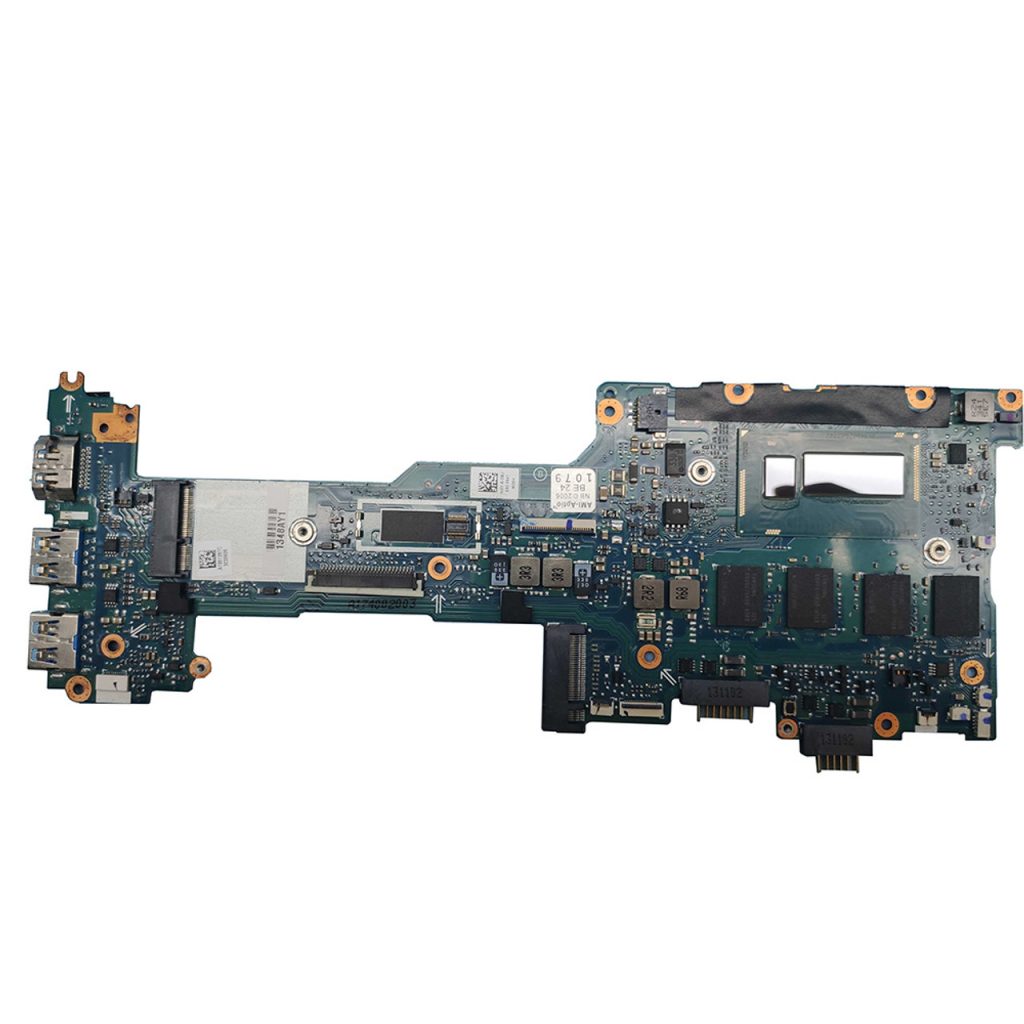
The price of a laptop motherboard is largely influenced by the laptop model type and it is most evident when looking at the three categories of laptops: budget, performance-oriented, and professional-grade. Each of these categories demands different levels of hardware complexity, which in turn, affects the cost of a replacement motherboard in the Indian market. Internal layouts of budget laptops are usually simple, they have basic chipsets, and they are minimal in terms of integrated components. The motherboard replacement cost stays low because the laptop design is simple and relies on the availability of a broad range of parts. The basic motherboards for these laptops support only the simplest of applications like web browsing, document work, and light entertainment. Thus, these boards have to be the cheapest offerings in the market and as a result, replacing them becomes a budget-friendly option for prolonging the life of older or entry-level systems.
However, the situation is different with multi-purpose or mid-range laptops. The price of these motherboards will be higher from the beginning since these machines can perform quite well but are still energy-efficient, so their design is optimized for both speed and power consumption. Often, such machines might have some of the fastest CPUs and the most efficient storage interfaces or even advanced graphics capabilities taking the motherboard components to a higher level and sometimes even requiring custom layouts to keep the machines slim. Because these boards integrate more features and use slightly higher-grade components, the price of a replacement tends to be moderately higher than that of basic laptops. Moreover, motherboard availability is another factor. Mid-range laptops that were quite popular usually have spare parts that are very easy to get, while models that are not so common may need to find specialized components, thus making the price higher.
Professional-grade laptops, that is, those intended for business, engineering, or media production use have motherboards that are much more complex than typical ones. They often incorporate such features as cutting-edge power supply regulation system, high-speed CPU support, more memory channels, and a variety of connections that are typically required by high-end software. The complexity of the design and the use of high-quality components make the replacements costly. They are also maintenance-free for an extended period of time, which means that their interior parts are manufactured according to the most stringent standards for durability. When such a motherboard is to be replaced, the price reflects both the quality of the build and the specialist nature of the board.
The upper tier of costs is usually occupied by power laptops that can be used for the most demanding applications, such as gaming, creative design, or computationally intensive tasks. These models feature sophisticated thermal systems, dedicated graphics support, and advanced circuit layouts that can handle high-power hardware. Their motherboards often include high-end chipsets, integrated graphics modules, and enhanced cooling pathways. Because their boards are highly specialized and not widely produced, replacements are among the most expensive on the market. Availability can also be limited, which further increases pricing, especially for older or high-performance models.
In the end, the motherboard price vary depending on the Sony Vaio Laptop Motherboard Price model there are many factors that determine the price of a laptop and these factors are the same in all laptop categories. The age of the laptop, the availability of the spare part, and the condition of the board (new or refurbished) are among the factors mentioned. Older models may be less available which may mean their prices have gone up due to the limited number on the market. On the other hand, newer models may have high prices simply due to the recent technology and that the parts are still not mass-produced. In general, the cost of a motherboard is quite varied according to its complexity, features, and availability which in turn makes high-performance and professional models’ repair costs significantly more than that of budget laptops.
Is it usually more cost-effective to repair a damaged Sony Vaio Laptop Motherboard Price motherboard (chip-level repair) or replace it completely?
The question of whether to go for a chip-level repair or to replace the entire Sony Vaio motherboard inevitably arises when a laptop’s motherboard gets damaged. The three main factors to consider in making this decision are the extent of the damage, the age of the laptop, availability of spare parts, and thus the overall cost of the repair. A thorough understanding of these factors will enable the user to select the most economical alternative. Below is a detailed comparison of the two options.
• Chip-level Repair Usually Costs Less
Usually, the cost of chip-level repair is much lower than the cost of replacing the whole motherboard. The customer incurs a cost only for the exact repairs as only the defective parts like power ICs, charging circuits, GPU chips, or connectors are repaired or replaced. This manner, chip-level repair still remains a very economical alternative for the majority of the laptop users, especially in cases where the damage is minor and does not impact the core components.
• Full Replacement Better for Severe Damage
In case of extensive damage to the motherboard like burnt circuits, broken layers, liquid damage spread over a few areas, or failure of several critical chips, chip-level repair may not yield desired results. As a general rule, in these situations, replacing the whole board is the only safe solution. A new motherboard takes care of the function and problems that might start again with partial repair.
• Repair Is a Cost-Effective Solution for Older Laptops
If a laptop has been in use for several years and its resale value has gone down, replacing the whole motherboard might not be worth it. Under such conditions, a chip-level repair not only gives the laptop a new lease of life but also does that without the need of committing a large amount of money as it is a low-cost option. This is especially the case when the laptop’s performance is still decent for the basic tasks.
There Are Better Options for Long-Term Usage: Fixing broken motherboards, Parents, and relatives.; May turn into an obsession repairing broken motherboards; So estimates the individual’s address with tools of bias. If the users are relying on the laptop for heavy workloads, professional work, studies, or daily productivity, the full replacement might be more beneficial. It gets rid of the risk of recurring failures that sometimes happen after chip-level repair.
• Chip-Level Repair Is Affected by Technician’s Skill
The process of chip-level repair demands great expertise, top-notch tools, and utmost care. If an experienced technician does the repair, the outcome can be fantastic. But if an inexperienced technician attempts it, further damage may be the result. Thus, the repair quality becomes a critical factor in the decision-making process of whether to repair or replace.
• Replacement Is Expensive But Gives Total Serenity
A new motherboard will have new parts that are often more durable and last longer. For users who prefer a problem-free solution, replacement—or perhaps even more costly—minimizes the likelihood of issues reappearing. This is especially true when the computer is still relatively new or it is valued.
• Repair Is the Way when Damage Is Not Extensive
When just a few components are damaged, the chip-level repair is not only the smartest choice but also the least expensive one. It makes the device operational again without the need to replace the working parts unnecessarily.
Usually, chip-level repair is the more prominent choice for cost reasons when the damage is minor, the laptop is older, or the user seeks an affordable solution. ASUS Laptop Motherboard price With i5 processor When the laptop is extensively used, has severe damage or its dependability is of the highest priority, the best alternative is a new motherboard. The decision about the best treatment will be influenced by damage severity, the age of the laptop, and the customer’s financial and performance needs.