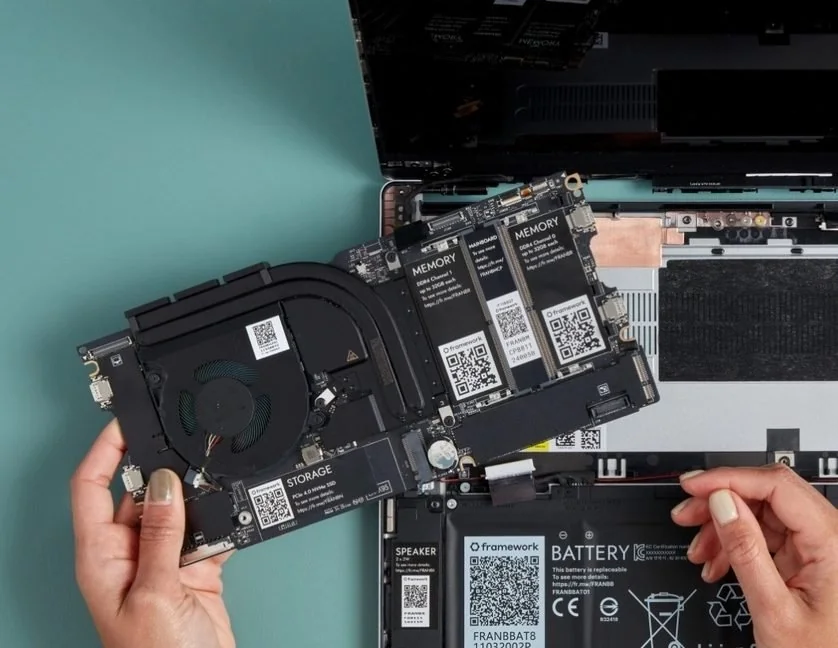
Typically one of the costliest repairs a standard laptop user is likely to run into, it is quite often said that to replace a laptop motherboard stands on top of the computer repair costs. The cost can be very different from one case to another depending on many factors such as the model and age of the laptop, its specifications, and the place where the repair is done. Because the motherboard is the main part that connects and controls almost all other hardware parts, its replacement is not only technically complicated but also labor-intensive, which greatly adds to the total cost.
The main factor that has a strong impact on the price is the laptop type. The entry-level or old laptops normally have cheaper motherboards, while the high-end or premium laptops utilize advancing and densely packed boards that are much more costly. In a lot of new laptops, the parts like the processor, graphics chip and memory are soldered straight onto the motherboard. This means that when replacing the motherboard, these components also have to be replaced, thus raising the cost even more. In some situations, the price of a new motherboard can come close to or even surpass 50% of the original price of the laptop.
Labor charges also play a major role in the total cost. A motherboard replacement implies nothing less than disassembly of the entire laptop, care must be taked for the delicate connectors, and reassembly should be on point. Skilled technicians are expensive for such specialized work, particularly for slim and lightweight laptops, where the internal components are in a tight space. Moreover, the duration involved in diagnosing and replacing can be counted in the overall service cost.
Availability of Parts is another major factor that should be taken into account. If the laptop model is relatively new or not very popular, it might be hard to locate a mother board that is not only compatible but also affordable. On the contrary, older machines might have motherboards refurbished or second-hand available to sell at low prices, but depending on the supplier they may come with short warranties or limited lifespan. Imposition of taxes on imports, charges for shipping, and the situation in the local market can affect the cost of products and repair services thereby making it more expensive in certain areas.
Moreover, it is crucial to analyze if the motherboard replacement is economically sensible. The board change for older laptops might be almost equal to the price of a new or refurbished laptop with better performance and warranty coverage. In such cases, a majority of users prefer to upgrade rather than repair. Nonetheless, even with a not-so-old lap-top, motherboard replacement may be a feasible solution, especially if the rest of the parts are functioning well.
To sum up, the cost of laptop motherboard replacement can be pretty much, as it involves not only high part prices but also skilled labor and sometimes limited component supply. Although there are many factors that determine the final price, it is usually regarded as one of the most expensive laptop repairs. Before arriving at a conclusion, it is recommended to assess the repair cost in comparison to the value of the laptop and to think about future benefits, potential disadvantages, and options to take a well-informed decision.
Also visit our Laptop Mother Board Price
How much does it typically cost to replace a laptop motherboard?
The typically cost to replace a laptop motherboard, in general, is one of the hardware repairs which are most expensive and the total cost can differ a lot depending on various factors. The motherboard is the principal circuit board that links all internal components, thus its replacement is accompanied by high parts costs as well as skilled labor. Realistically, what are the expectations if one were to be filling up a laptop’s motherboard? What is supposed to be the cost afterwards?
Average cost range
Replacement of a laptop motherboard typically incurs a cost that varies from moderate to high. For simple or old laptops the cost is mostly on the lower side whereas the cost for replacing the motherboard of a new or high-performance laptop is much higher. The cost of a motherboard replacement can frequently be a very small percentage of the laptop’s original cost or nearly the price of a new device.
Laptop model and specifications
The model of the laptop as well as its hardware configuration significantly influence the price. The motherboards of entry-level laptops are usually much simpler and so are the replacement procedures. On the other hand, laptops with fast processors, dedicated graphics, or superior cooling systems require complex motherboards which are very expensive as well. Ultrabooks and ultra-slim laptops also generally incur more motherboard costs at the design stage because of the need for custom-designed compact boards.
Integrated components on the motherboard
Modern laptop motherboards often have critical components such as the processor, graphics chip, and sometimes memory soldered directly onto the board. If the motherboard malfunctions, all the other parts have to be taken out and replaced. This combination of parts adds a lot more to the expense than the previous laptops where you could just change one part at a time.
Labor and service charges
Labor costs comprise the largest part of the total expenses. Disassembling the laptop completely, dealing cautiously with delicate connectors, and precise reassembly are the steps involved in motherboard replacement for a laptop. The complexity of the repair necessitates having it done by skilled technicians whose labor cost, especially for ultra-thin laptops, will be high accordingly.
Availability of replacement parts
How easily the replacement motherboard can be obtained is also a factor that affects the cost. Parts for common laptop models are usually available at competitive prices and are readily available. However, motherboards for newer, discontinued, or less common models can be more difficult to find and more expensive. In some instances, refurbished or used motherboards are available at a lower price, but they might come with limited warranty.
Warranty and repair options
In case the laptop still has its warranty or an extended service plan, the replacement mother’s cost could be significantly reduced or even free of charge. Those users without warranty covering will have to pay the full price, which can be rather steep. Authorized service centers usually charge higher than independent repair shops, but their services may come with better quality assurance.
Is motherboard replacement worth it?
In many instances, particularly in the case of older laptops, motherboard replacement cost can be a non-economic choice. If the repair cost comes in at approximately the same level as a new or refurbished laptop’s price, then upgrading the device may be the preferable option. While the case is different in case of new or high-end laptops, motherboard replacement is still a worthy investment.
Typically, the cost of a laptop motherboard replacement is determined by laptop make and model, integrated parts, labor costs, and part availability. This repair ranks among the most expensive ones, and thus, it is advisable to carry out a thorough comparison between the repair cost and the device value before deciding.
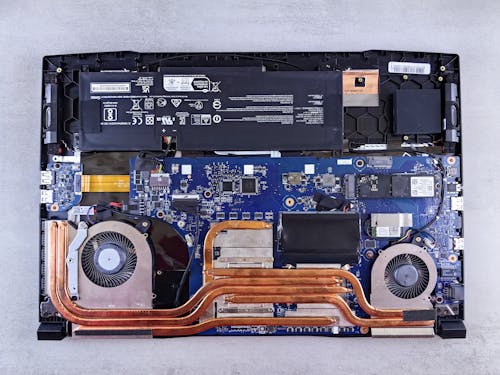
HHow much does it typically cost to replace a laptop motherboard?
Among the various laptop repairs a laptop owner might face, replacing the motherboard is typically one of the most expensive ones. The usual price varies depending on numerous aspects like the model, age, hardware configuration, and the accessibility of the parts needed for replacement. The motherboard being the central part that interlinks the processor, memory, storage, and all other parts, its replacement involves both high-cost hardware and skilled tech labor.
The price for replacing a motherboard in a standard laptop can be a little less than the purchase price of the laptop or turned out to be very expensive. Budget laptops or older ones usually use less complicated motherboards, thus the entire process of replacement is also less expensive. On the contrary, high-performance laptops, with the newest processors, state-of-the-art graphics, and a pretty design, usually have very expensive motherboards. In many cases, the cost of replacement can get as high as the original retail price of the laptop, and in some situations, it can be not much less than buying a new one.
A significant factor indeed is the integration of components, which is another reason why motherboard replacement incurs a high cost. Many times in modern laptops, necessary components like the processor and graphics unit are soldered onto the motherboard, being the latter the only one that can fail. Consequently, if the motherboard goes, these parts have to be replaced as well, even though they function properly. This level of integration increases the price of the replacement board compared to older laptops where individual components could be swapped independently.
Labor costs also have a strong impact on the total expense. Replacing a motherboard in a laptop is not only a hard but very long process, as it means disassembling the laptop completely. The technicians have to disconnect and remove the old motherboard beforehand, which means great artistry and experience are necessary besides precision handling that also add up to the labor costs, more so for slim and lightweight laptops with compact internal configurations.
Availability of the replacement motherboard is another important factor that comes into play in determining the common cost. If the model of the laptop is a popular one, the motherboards that go with it are usually more readily available and at reasonable prices. However, with the latest models, discontinued laptops or the like, it is not only hard but also costly to find the right motherboard for that specific case. At times, refurbished or second-hand motherboards are sold off for less but they might carry hardly any warranty or their life span might be uncertain.
Also, one has to deliberate if the replacement of the motherboard is financially feasible. It may not make sense to replace the motherboard in an old laptop, especially if other parts are also getting weak. A considerable number of users would rather use that money for the purchase of a new or refurbished laptop. Nevertheless, changing the motherboard might still be an option for the newer or high-end laptops since it can bring back the entire functionality of the device and also extend its life.
To summarize, the replacement cost of a laptop motherboard is very different from one situation to another, but it is nonetheless one of the most expensive repairs. The final cost is affected by integration of the hardware, labor costs, and availability of parts. It is wise to consider the cost of the repair in comparison to the current value of the laptop and its long-term usability before making a decision regarding the replacement.
Does the cost of motherboard replacement vary by laptop brand and model?
Certainly, the motherboard replacement price is a huge variation depending on the laptop brand and model, and this variation is caused by several factors. A simple explanation is provided below, with points to help you understand how brand and model influence the overall replacement cost.
Cost differs according to the market position of the brand
The laptop brands are differently positioned in the market—some are budget-friendly and others are luxury. The premium brands make use of high-quality components and have very intricate motherboard designs which are specially made for their models. A motherboard on the MediaTek processor is fit for the budget chipset while the Intel processor chipsets keep up with mid-range chipset motherboards. This difference in manufacturing quality and design complexity has a direct impact on the price of replacement.
Model series has an impact even within the same brand
The model of the laptop is still a significant factor in determining motherboard cost, even if a single brand is involved. The motherboard of entry-level and basic models is less complex, and that is why the part cost is lower. On the contrary, gaming or high-performance series with high-tier processors, dedicated graphics, and enhanced cooling need more sophisticated motherboards, which are pretty much expensive to replace. Hence, the price can differ significantly among models from the same brand.
Cost increase is a result of unique designs
Some brands are using unique motherboard designs which are exclusive for certain models. The custom boards may not be fitted with standardized boards that can be used in several laptops since these are built according to specific requirements and the sourcing of them may be difficult. Thus, the higher price of replacements is a consequence of this exclusivity because the number of compatible parts is small, and they might have to be ordered from specialized suppliers rather than generic aftermarket distributors.
Availability of replacement parts
The parts availability also depends on the brand and model. The most popular brands and the best-selling models usually have motherboards that are easily available in local markets or online, which can lead to a reduction in costs. The case of older or discontinued models, or models that had limited production runs, might be with spare parts that are hard to find. Hence, the cost of a replacement motherboard for such models can be significantly higher due only to the limited availability and demand.
Integration level of core components
High-end laptops, particularly those coming from the well-known brands, usually have all the major components such as CPU, GPU, and memory integrated on the motherboard. In case one of these components fails, the entire board has to be replaced. This integration not only raises the cost of the board but also makes the repair work more complicated. Budget laptops may still have modular layouts, which can sometimes decrease the total cost if separate components can be replaced individually.
Service and labor charges differ by brand
The official or authorized service centers usually have different service charges for different brands. Premium or well-established brands might charge more for motherboard replacement due to special tools, training, and certification standards for repairs. Although the independent repair shops might provide their services at a lower cost, the parts for some brands may still be very expensive, particularly if original parts are requested.
Warranty and coverage influence real cost
Some brands provide better warranty and extended service plans. In case of motherboard issue under warranty the user might pay less or nothing at all. The coverage of warranty can be different from brand to brand and model to model, thus, for example two users with different laptops could end up paying very different amounts for basically the same repair just because of warranty policies.
Brand reputation and manufacturing quality
Sometimes brand parts such as those of the durables and excellent engineering brands are more expensive than others because of the high perceived value and reliability attached to them. Users of such brands might be paying a slightly higher price for the replacement of the motherboards, not just due to quality but also because of brand perception and the demand for official components.
To sum up, motherboard replacement prices differ greatly according to laptop brands and models. Brand positioning, model complexity, part availability, service charge, warranty coverage, and design integration are among the factors that affect the final price you will pay.